
Valence Framework: modular smart contracts for an AI-first era
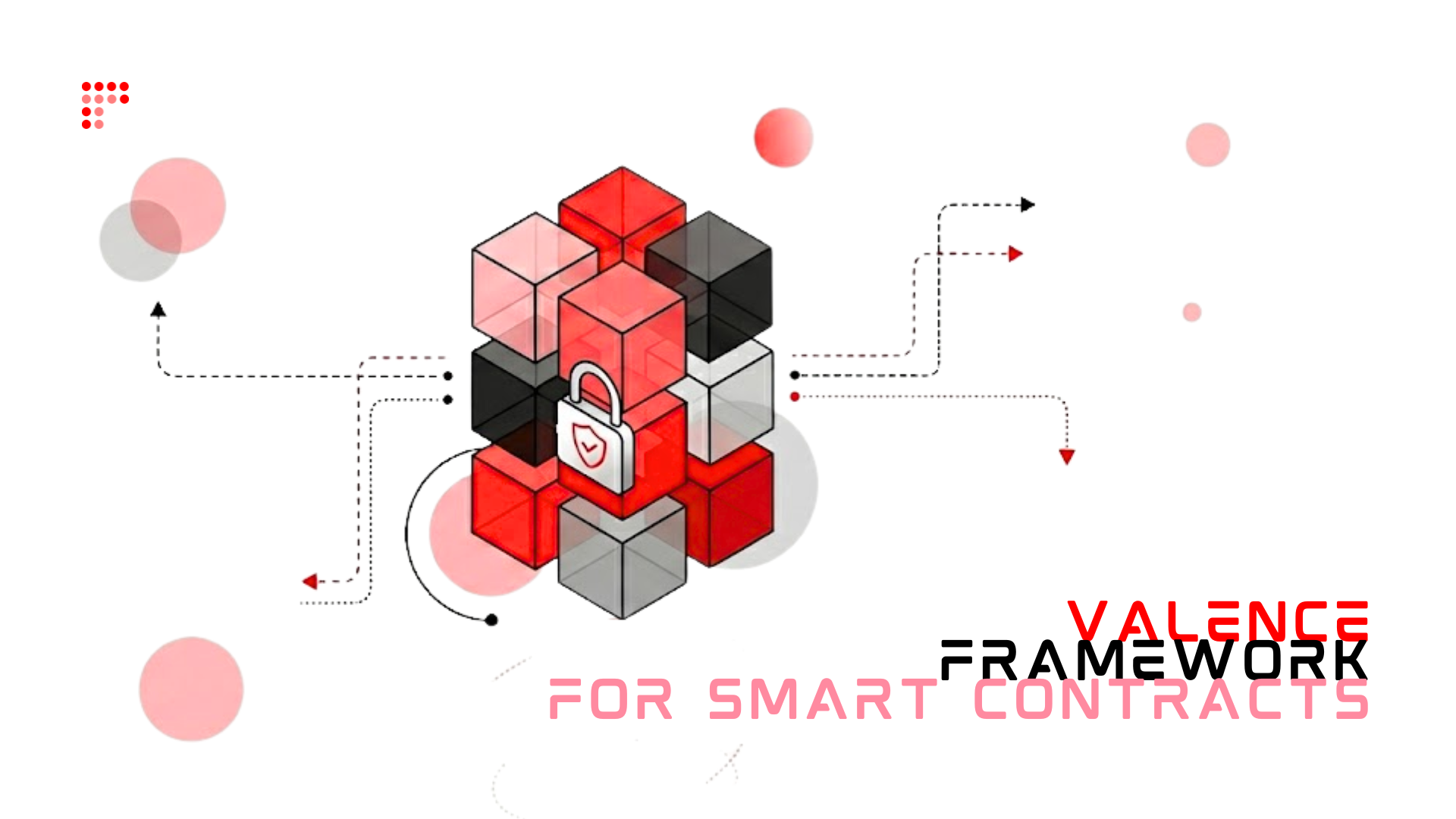
For much of the past decade, smart-contract architecture has been driven by a single overriding concern: how to make systems upgradeable without sacrificing auditability. Standards such as EIP-2535 (the Diamond Standard) and disciplined package-oriented architectures answered that question by decomposing logic into carefully bounded modules, governed by explicit upgrade processes.
That approach has largely succeeded. But a new constraint is now emerging—one that exposes the limits of static modularity. As decentralised systems increasingly interact with autonomous agents, algorithmic governance, and machine-driven decision engines, the problem is no longer merely how to upgrade contracts safely, but how to design contracts that are meant to evolve at runtime.
Valence is an attempt to answer that shift.
From packages to orchestration
Valence builds directly on the Diamond Standard, but rethinks how modularity is represented and governed. Instead of treating a module as a bundle of coordinated artefacts—interfaces, storage libraries, internal logic, wrappers—it collapses the unit of composition into a single, self-describing contract. Each module (an “Orbital”) explicitly declares its identity, version, storage schema and callable surface.
This “contract-as-manifest” approach is not a stylistic choice. It is a response to a practical reality: as systems grow, the coordination cost of keeping multiple artefacts aligned becomes the dominant source of operational risk. Version skew, silent storage drift and brittle upgrade scripts are not edge cases; they are recurring failure modes.
By consolidating those concerns into one auditable unit and enforcing them through a small, stable kernel, Valence shifts modularity from convention to protocol. The kernel becomes the system’s control plane, governing installation, upgrades, selector routing and lifecycle transitions in a verifiable way.
Why AI-first systems change the equation
The deeper motivation behind Valence is not tooling convenience, but architectural alignment with AI-first development.
In an AI-first context, smart contracts are no longer assumed to be “complete” at deployment. They may be extended by off-chain agents, reconfigured in response to real-time signals, or adapted by automated governance processes. That requires three properties that traditional package-oriented designs struggle to provide as first-class primitives.
First, runtime dynamism.
Valence treats post-deployment evolution as a native operation. Modules can be installed, upgraded or removed through a standardised lifecycle—complete with explicit hooks for initialisation and migration. For an autonomous agent, this offers a predictable interface to change system behaviour without redeploying the entire contract.
Second, a clear semantic control surface.
The kernel exposes an explicit, enumerable interface for orchestration. Modules advertise their version, schema commitments and exported selectors in a machine-legible way. This makes the system easier for external agents—human or artificial—to inspect, reason about and act upon.
Third, additive evolution rather than mutation.
Valence favours the idea that new behaviour is added alongside existing logic, rather than replacing it wholesale. This aligns more closely with how AI systems evolve: by layering new policies, models or strategies as conditions change.
Package-oriented frameworks remain highly effective when the full set of behaviours is known upfront and stability is paramount. But as protocols move toward agent-managed treasuries, adaptive risk engines and algorithmic governance, static composition increasingly feels like a constraint rather than a safeguard.
The economics of a module marketplace
These same architectural choices also explain why Valence is naturally suited to module marketplaces.
A functioning marketplace depends on modules being publishable, discoverable and safely integrable by third parties. Valence modules expose exactly the metadata such environments require: stable identifiers, semantic versions, storage schema hashes and explicit callable surfaces. Compatibility can be checked mechanically before installation, and lifecycle hooks provide a predictable “plug-and-play” experience.
Crucially, the kernel acts as a universal integration point. Marketplace tooling does not need to account for idiosyncratic assembly logic or bespoke adapters; it can target a single, well-defined interface. This lowers the barrier to participation for external developers and reduces the operational burden on protocol operators.
By contrast, package-oriented systems excel in closed environments with tight governance and fixed compositions. Their rigidity is a strength in institutional settings—but it becomes friction in open ecosystems where diverse contributors are expected to publish reusable logic.
Trade-offs, not dogma
None of this makes Valence a universal replacement for package-oriented frameworks. Its dynamic nature introduces governance considerations of its own, and its kernel becomes a critical trust boundary. Systems that prioritise immutability, closed-world verification and minimal runtime variance may still prefer more static architectures.
But the direction of travel is clear. As decentralised systems begin to resemble long-lived digital infrastructures—interacting with AI agents, adapting to new regimes and composing logic from open ecosystems—the cost of rigidity rises.
Valence reflects that reality. It keeps the discipline that made modular smart contracts viable in the first place, while re-architecting it for a world in which change is not an exception to be managed, but a core design assumption.
In that sense, it is less a break with existing practice than the next step in a familiar progression: from upgradeability, to governance; from governance, to orchestration; and from orchestration, to systems that can safely evolve alongside the intelligence that increasingly operates them.
Github: FeverTokens-Labs/Valence


- © 2025 FeverTokens
- 38 rue Jean-Mermoz, 75008, Paris, France